SoftwareMining •
COBOL to Java & C#
• Predictable & Repeatable
SoftwareMining's automated, non-AI, rule-based tools first translate COBOL applications into maintainable Java or C# source code. After translation, optional Large Language Model (LLM) integration can generate program summaries and explanatory comments for the translated application.
The LLM does not participate in the COBOL conversion or alter the translated business logic. Keeping translation and documentation as separate stages preserves predictable, repeatable code generation while helping developers understand and maintain the modernized application.
After translation, selected generated source code can be analysed by ChatGPT or another approved generative AI model. The model can identify program responsibilities, explain processing logic and generate documentation that can be reviewed before being added to the Java or C# source code.
This optional documentation can improve developer understanding and reduce the time required to become familiar with the translated application. It does not replace compilation, code review or functional-equivalence testing.
Documentation can help teams locate and understand important processing, but identifying isolated business rules requires careful analysis of wider application dependencies. See our guide to COBOL business rule extraction and translation-based alternatives .
Related paper: Generative AI and Rule-Based COBOL Modernization
After COBOL translation has been completed, ChatGPT or another approved generative AI model can analyse selected generated source code and produce supplementary documentation. Typical outputs include:
AI-generated documentation should be reviewed before it is incorporated into the translated application. It supplements the generated Java or C# source code without participating in conversion or changing executable business logic.
Supplementary documentation can help developers understand unfamiliar business logic, reduce onboarding time and maintain translated applications more effectively. Organizations retain control over whether AI-assisted documentation is used and which generated source code is submitted for analysis.
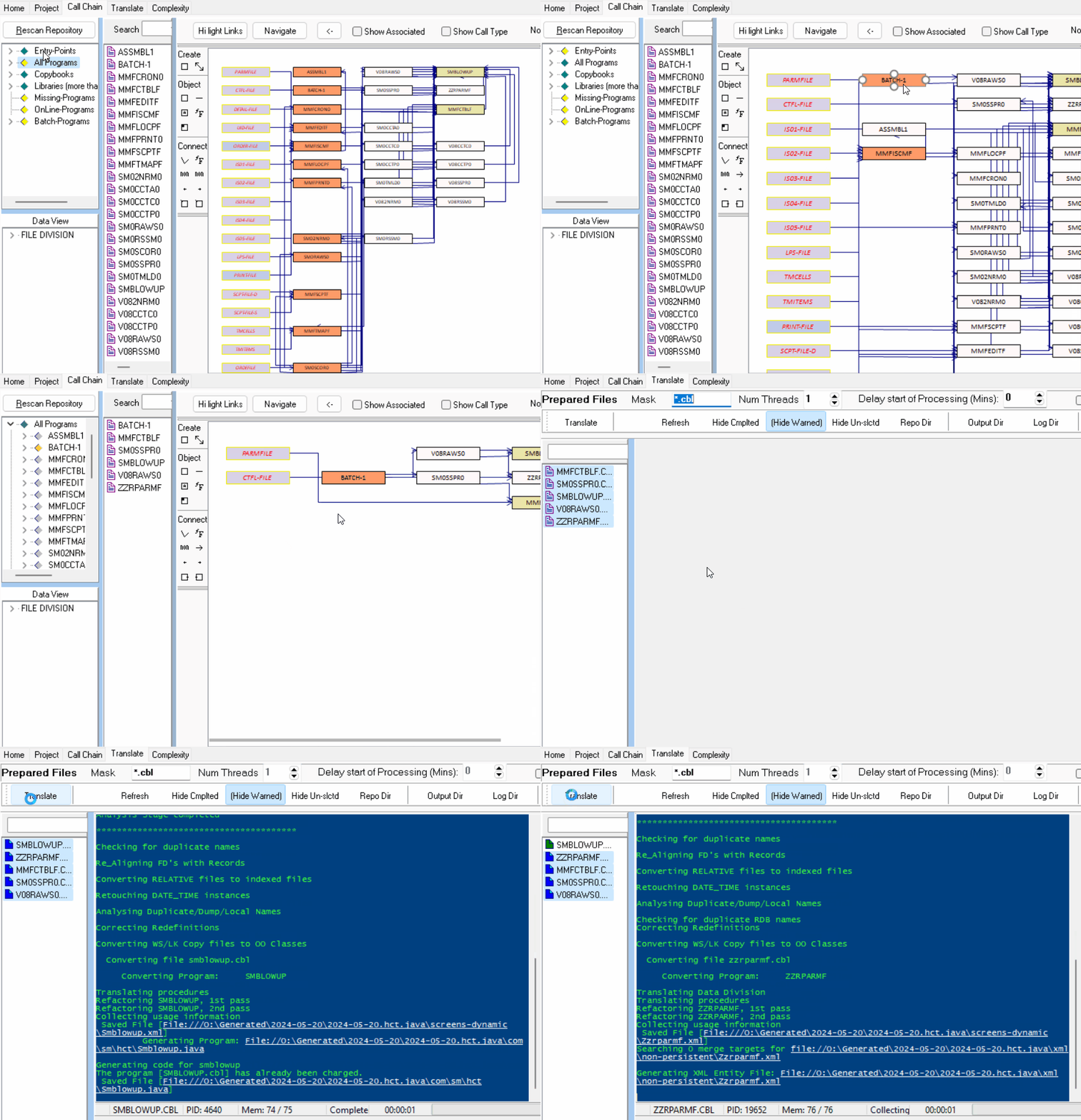
Separately from the optional LLM integration, SoftwareMining's application analysis tools generate dependency information and control-flow diagrams directly from the COBOL application. These rule-based analysis features do not depend on generative AI.