SoftwareMining •
COBOL to Java & C#
• Predictable & Repeatable
SoftwareMining's downloadable COBOL-to-Java and COBOL-to-C# Conversion Toolkit converts complete enterprise COBOL applications into maintainable Java or C# source code using automated conversion. Enterprise customers and system integrators can download and evaluate the toolkit within their own infrastructure.
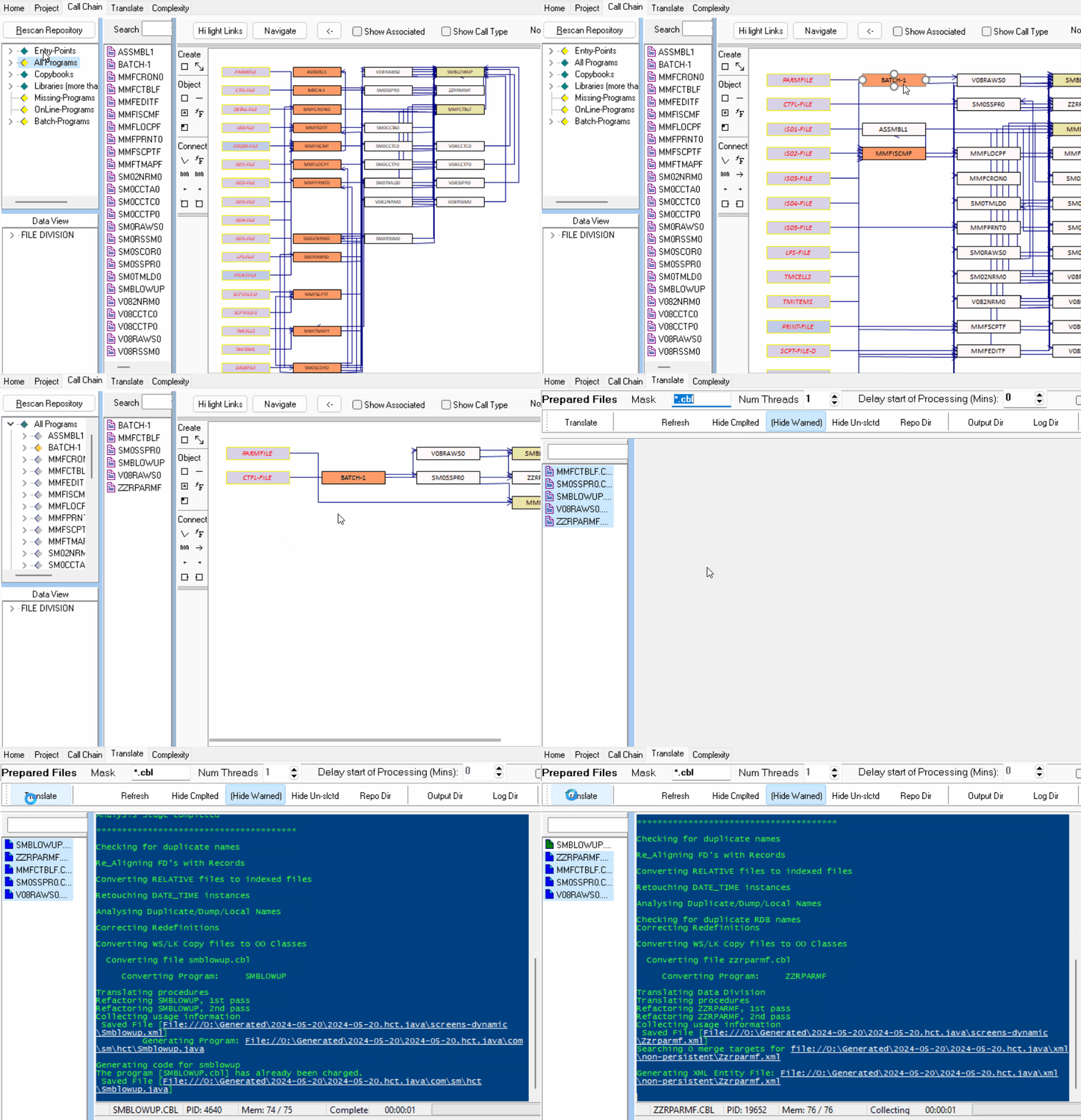
The toolkit combines application analysis, dependency reporting, automated conversion, runtime support and functional-equivalence testing. Generated applications can use standard development and DevOps processes and run in the cloud or on-premises.
Complete enterprise applications are analysed, converted, compiled and validated together with their data and platform dependencies.
Review the complete COBOL-to-Java and COBOL-to-C# Conversion Toolkit features .
The conversion process produces a complete Java or C# application, including converted business logic, data structures and components replacing supported COBOL and mainframe services.
SoftwareMining identifies programs, copybooks, call relationships and dependencies to support project scoping, estimation and testing.
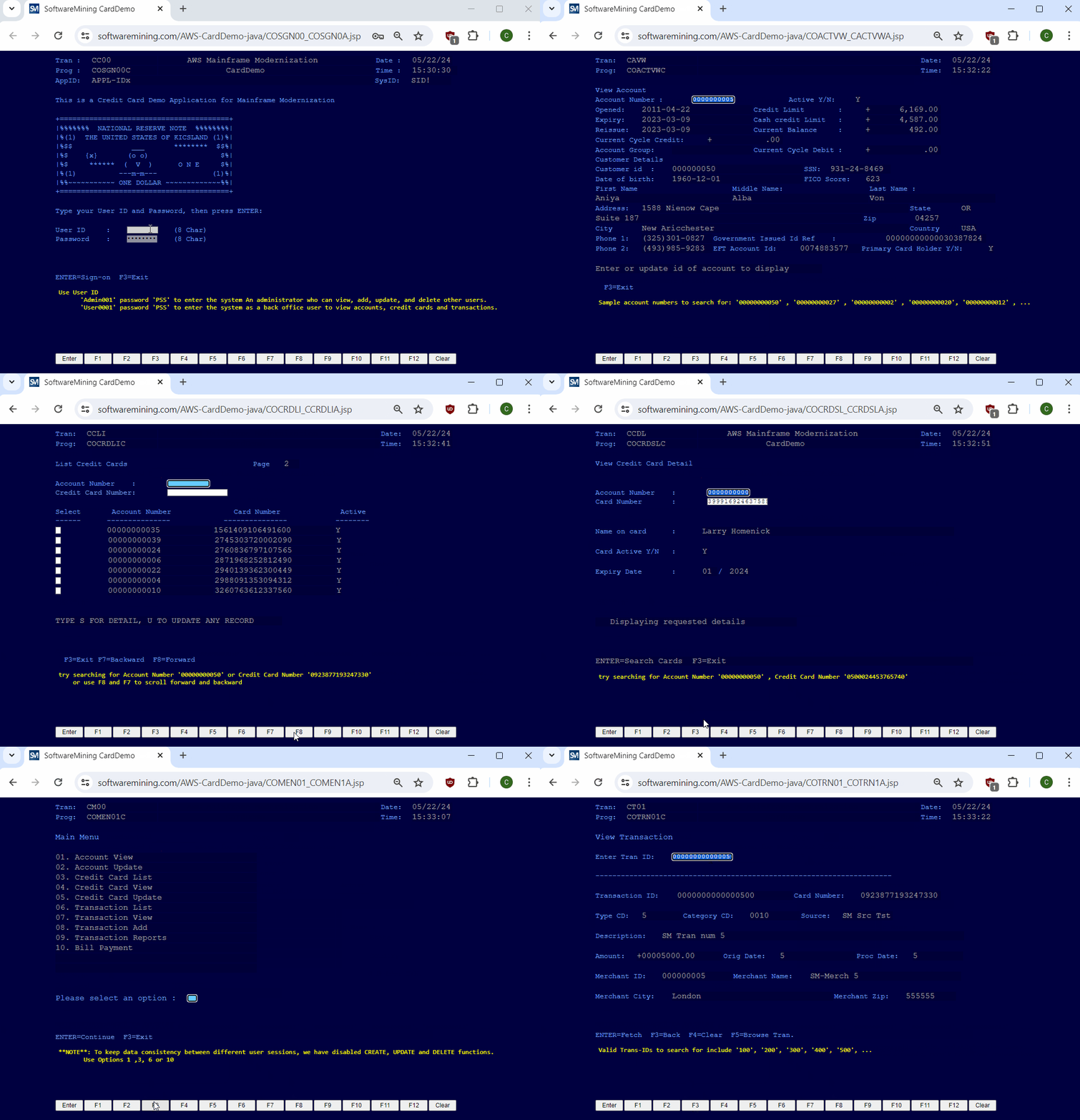
Explore AWS CardDemo converted from CICS COBOL to Java and run the resulting application online.